In addition to the London Summer Olympics, the next United States Presidential election, Batman and The Avengers (well, for some), we have a lot to look forward to in 2012.
As a driver, 2012 also brings a new set of traffic laws to keep in mind.
“Our hope is by educating the public of these new traffic safety laws in advance, more lives will be saved in the new year.” –CHP Commissioner Joe Farrow.
Although the following list is not comprehensive, a few of 2012’s major changes are below:
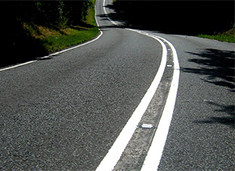 Double Parellel Solid White Lines
Vehicles will be prohibited from crossing double parallel solid white lines except where permitted. (AB 1105, Gordon)
Car and Booster Seat Requirements
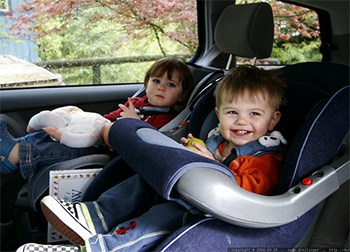 A change to California’s Child Passenger Safety Seat law will now require children to ride in either a car seat or booster seat until the age of eight, or until they reach a height of 4 feet 9 inches. This law also requires children who do not meet the age or height requirement to ride in the rear seat of a vehicle unless the vehicle has no back seats, the restraint system cannot be properly installed or the rear seats are already occupied by children under age eight. However, the law still maintains that a child may not ride in the front seat of a vehicle with an active passenger airbag if they are under one year of age, less than 20 pounds, or riding in a rear-facing child safety seat. (SB 929, Evans)
Sobriety Checkpoints
 Drivers are required to stop and submit to a sobriety checkpoint. However, peace officers will be prohibited from impounding a vehicle for 30 days out of a sobriety checkpoint if the only offense by the driver is failing to hold a valid driver license. The new law requires that the officer make a reasonable attempt to identify the registered owner in order to release the vehicle. (AB 353, Cedillo)
Restricted Drivers’ License Conditions
 Anyone who is convicted of reckless driving under Section 23103.5 of the Vehicle Code can apply for a restricted driver license prior to the completion of their one-year suspension, provided they meet specified conditions, including the installation of an Ignition Interlock Device in their vehicle. (AB 520, Ammiano)
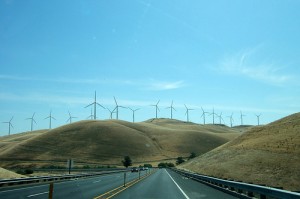
Double fine zones on Vasco Road
A segment of Vasco Road between I-580 in Alameda County and Walnut Boulevard in Contra Costa County has been re-designated as a double fine zone until January 1, 2017. (AB 348, Buchanan)
Electric Vehicles
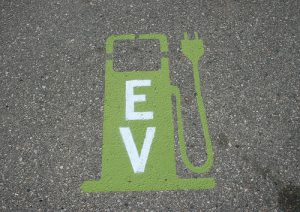 Electric Vehicles (EV) must now be plugged in for refueling when occupying an EV-designated parking space, otherwise they may be towed. In addition, the law prohibits a person from obstructing, blocking, or otherwise barring access to an EV-designated parking space. (AB 475, Butler)
The County of Riverside, or any city within the county, has been permitted to develop a Neighborhood Electric Vehicle transportation plan. (AB 61, Jeffries & SB 290, Correa)
Inyo County, using a pilot program, has been granted authority to explore options for developing a greater network of linked Off-Highway Vehicle trails; they will be allowed to designate combined use highways on unincorporated county roads for up to 10 miles, subject to CHP approval. This program will remain in effect until January 1, 2017. (AB 628, Conway)
Regulation of advertising signs on motor vehicles
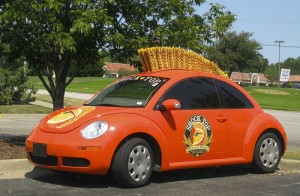 Local governments can now regulate advertising signs on any motor vehicle parked or left standing upon a public street, except for signs painted directly upon or permanently affixed to the vehicle for permanent decoration, identification, or display that do not extend beyond the overall length, width, or height of the vehicle. (AB 1298, Blumenfield)
 Livestock carriers on 101
Licensed livestock carriers can continue to travel on Highway 101 within the counties of Del Norte, Humboldt, and Mendocino from its junction with Highway 1 near Leggett, north to the Oregon border until January 1, 2015. (AB 349, Chesbro)
DUI Repeat Offenses
 A law dealing with repeat driving under the influence (DUI) offenders that was passed in 2010 also goes into effect on January 1:
Section 23579 was added to the Vehicle Code, which authorizes courts to revoke a driver’s license for 10 years if a person is convicted of three or more DUIs. Under this law enacted in 2010, a motorist may be allowed to apply for reinstatement of his or her driver’s license with the Department of Motor Vehicles (DMV) after five years, if the person installs an Ignition Interlock Device (IID) in their vehicle. The law allows the DMV to terminate this restricted license if the IID requirements are not met. (AB 1601, Hill)
The points above are only a synopsis of the new laws listed here and only a partial list of California’s new laws adopted for 2012. For complete information on chaptered bills enacted in 2011, please refer to the Legislative Counsel website at www.LegInfo.ca.gov.
For the CHP media release containing details of all changes to California’s traffic laws in 2012, download State’s Motorists to Ring in the New Year with New Laws (PDF) from the California Highway Patrol website.
Image credits (top to bottom): cauld lad, sean dreilinger, ZanePaul Photos, CA DMV, wangkai, Chrysler-Group, ***Karen, rabbit_mage, Greencolander
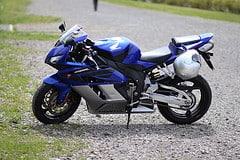 Instruction Permit: Motorcycle (AB 1952, Niello) This bill added Section 12509.5 to the Vehicle Code, which lays out the age-specific requirements drivers must fulfill to obtain a motorcycle instruction permit. Among those requirements for drivers younger than 21 years of age is the successful completion of the motorcycle safety course administered by the CHP.
 Motorcycle Theft: (AB 1848, Garrick) This bill adds Section 466.65 to the Penal Code and makes it a misdemeanor to possess, give, or lend the following:

 Ignition Interlock Devices (IID)
 Driving Under the Influence
 Move Over/Slow Down (SB 159, Simitian) The new law removes the January 1, 2010, sunset date on Sections 21809 VC and 25253 VC. Section 21809 VC requires a person driving a vehicle on a freeway and approaching in a lane immediately adjacent to a stationary, authorized emergency vehicle that displays emergency lights, or a stationary tow truck that displays flashing amber warning lights, to safely make a lane change from that lane, or slow to a reasonable speed. Section 25253 VC requires tow trucks used to tow disabled vehicles to be equipped with flashing amber warning lamps and authorizes tow trucks to display flashing amber warning lamps while providing service to a disabled vehicle. However, this section prohibits tow trucks from displaying flashing amber warning lamps on a freeway except when an unusual traffic hazard or extreme hazard exists.
 Driving with TV or Video
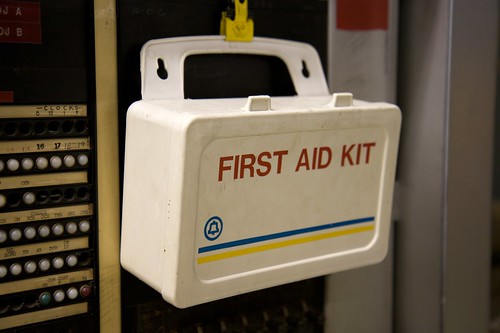 Good Samaritans
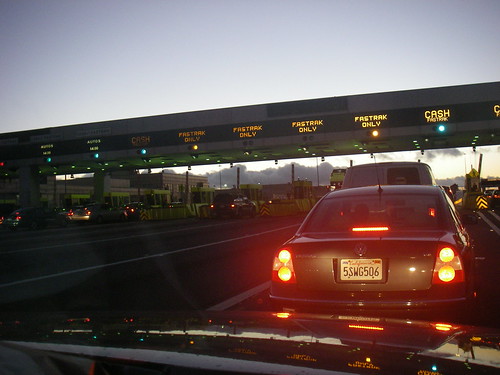 Evasion of Tolls