transportation laws | 511 Contra Costa

New California Transportation Laws for 2026

With the start of the new year, a number of new laws and fare or toll increases go into effect. We’ve selected the most significant ones affecting pedestrians, motorists, and cyclists.

TOLL & FARE INCREASES

Toll Increases for Seven Bay Area Bridges
On January 1, 2026, tolls at the region’s seven state-owned toll bridges went up by 50¢. Regular tolls for two-axle cars and trucks (as well as motorcycles) at the San Francisco-Oakland Bay, Antioch, Benicia-Martinez, Carquinez, Dumbarton, Richmond-San Rafael and San Mateo-Hayward Bridges are now $8.50. (Cars with 3 or more passengers and a FasTrak Flex tag set to 3+ can receive 50% off these tolls.)

BART Fare Increase
On January 1, 2026, BART fares increased 6.2% to keep pace with inflation. The average fare went up 30 cents, from $4.88 to $5.18. This increase allows the agency to pay for continued operations and to work toward restoring financial stability.

MOTOR VEHICLE SAFETY

Slow Down and Move Over (AB 390, Wilson)
Expands the “slow down and move over” law to include any stationary vehicle or highway maintenance vehicle using flashing hazard lights or warning devices. Drivers approaching such a vehicle must move into a lane that is not next to the stopped vehicle or slow down to a safe speed if changing lanes is not possible.

ELECTRIC BICYCLE SAFETY

Electric Bicycles: Reflector or Rear Light Required (AB 544, Davies)
E-bikes must have a red reflector or a solid or flashing red light with a built-in reflector on the rear during all hours of operation, not just during darkness as the law previously required.

Off-Highway Electric Motorcycles (SB 586, Jones)
An “off-highway electric motorcycle” or “eMoto” is now defined as a vehicle that:

  • Is designed primarily for off-highway use
  • Is powered by an electric motor that does not require a motor number
  • Has handlebars for steering, a manufacturer-provided straddle seat, and two wheels
  • Is not equipped with manufacturer-provided pedals

The law also classifies an “off-highway electric motorcycle” or “eMoto” as an off-highway motor vehicle (OHV), thereby requiring the operator to follow OHV rules, including displaying a DMV-issued ID plate or placard.

Electric Bicycles and Storage Batteries (SB 1271, Min)
Beginning January 1, 2026, the law requires that e-bikes and their components, such as batteries and charging systems, must be tested by accredited laboratories to meet specific safety standards. The bill also mandates labeling these products to show compliance with safety regulations, ensuring consumers are informed.

PEDESTRIAN SAFETY

School Zone Speed Limits (AB 382, Berman)
Gives local authorities the discretion to lower the school zone speed limit from 25 to 20 miles per hour. On January 1, 2031, the speed limit for school zones throughout California will automatically decrease from 25 to 20 miles per hour.

AUTONOMOUS VEHICLES

Autonomous Vehicles (AB 1777, Ting)
Law enforcement officers now have the ability to issue a “notice of autonomous vehicle (AV) noncompliance” to an AV manufacturer for an alleged traffic violation committed by one of their vehicles.  

IMPROVEMENTS FOR DRIVERS

Duplicate Driver’s License for Change of Address (AB 506, Committee on Transportation)
Allows a person to request a duplicate driver’s license from the DMV after they change their address. Previous law limited duplicate licenses to cases where the license was lost, destroyed, mutilated, or a new true full name was required.

Parking Ticket Relief (AB 1299, Bryan)
Authorizes local governments to waive or reduce parking penalties if a person is unable to pay and requires the provision of a payment plan if requested. The goal is to prevent escalating fines, vehicle towing, and lien sales that can disproportionately impact low-income individuals.

To read more about these and other new transportation laws, check out the DMV’s list of noteworthy new laws taking effect in 2026.


Additional Reading:

New California Transportation Laws for 2025

New California Transportation Laws for 2024

New California Transportation Laws for 2023

New California Transportation Laws for 2022

New California Transportation Laws for 2021

New California Transportation Laws for 2024

With the start of the new year, a number of new laws go into effect. We’ve selected the most significant ones affecting pedestrians, motorists, and cyclists from the California Highway Patrol’s review of new transportation laws:

Increasing Visibility Around Crosswalks (AB 413): Vehicles are prohibited from stopping or parking a vehicle within 20 feet of an intersection or crosswalk, or within 15 feet of any crosswalk where a curb extension is present. The law is intended to increase visibility for all road users to see oncoming traffic.

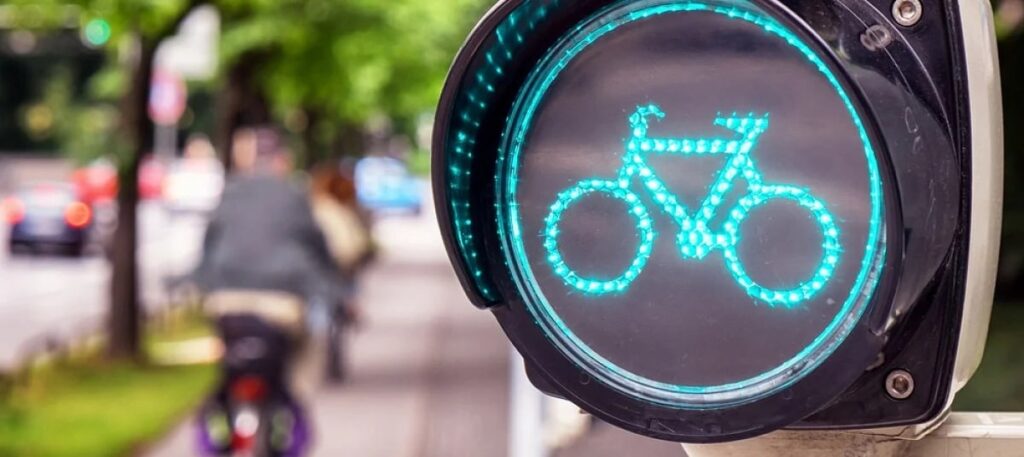
Cyclists Crossing with Bicycle or Pedestrian Signals (AB 1909): Whenever a traffic signal with different colored bicycle symbols exists in the same location as traffic signals for cars or pedestrians, a cyclist must obey the bicycle traffic signal. If no bicycle traffic signal is present, cyclists are allowed to cross when the pedestrian walk signal is lit, even if the traffic signal for cars is red.
Speed Camera Pilot Program (AB 645): As part of a five-year pilot program, Oakland and San Francisco can install a limited number of speed cameras on local streets where there are safety concerns. The cameras will automatically take a picture of a speeding car’s license plate and deliver a notice of violation to the registered owner through the mail.

Crackdown on Catalytic Converter Theft (SB 55): To help combat theft, motor vehicle dealers are required to ensure a catalytic converter has been permanently marked with a vehicle’s identification number (VIN) before selling that vehicle.

Traffic Stops (AB 2773): Requires a peace officer making a traffic or pedestrian stop to state the reason for the stop before asking any questions.

Driver’s Licenses Can No Longer Be Impounded (AB 1125): Courts no longer have the authority to impound a person’s driver’s license if they fail to make payments for bail or a fine. The law is intended to reduce the harm caused to people with low incomes who need to drive to work or access essential services.

To read more on these and other new transportation laws, read the California Highway Patrol press release.


Additional Reading:

New California Transportation Laws for 2023

New California Transportation Laws for 2022

New California Transportation Laws for 2021